

This year, we’re moving forward with several important steps in the Trust’s 10-year tree plan. The plan covers regular maintenance, the removal of dead or dangerous trees, biennial safety surveys of all 463 individually-tagged trees, and gradual re-planting where gaps in the canopy emerge. Many smaller trees also grow throughout the park, but these are managed as groups rather than individually.
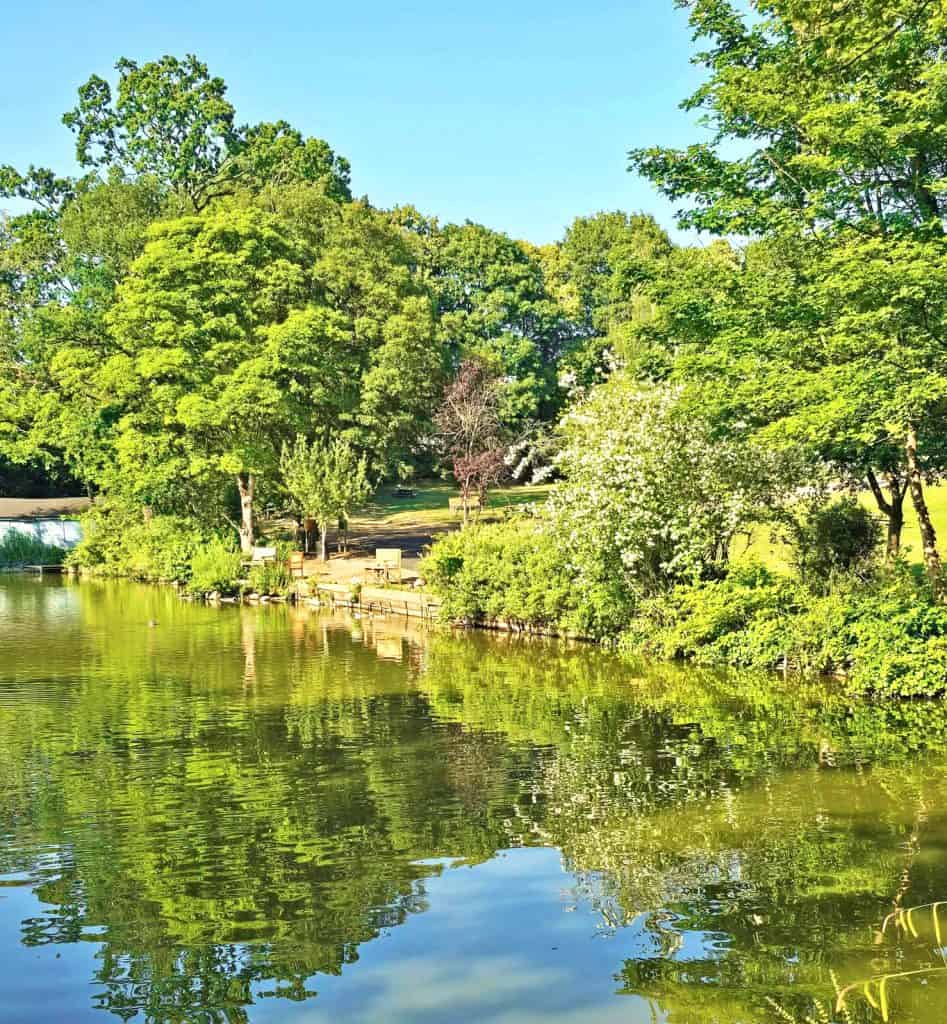
In 2024/25, we developed the Community Orchard on the sloping meadow, which received strong support from subscribers. We’re now creating a new avenue of lime trees along both sides of the main path leading down to the pool—a feature that will mature into a striking centrepiece over the coming decades. We’ve also planted a small grove of silver birch in a gap between the Phoenix Sensory Garden and the I Am Yogi studio.
Creating the lime avenue means removing three healthy but misplaced trees currently flanking the main path. Removing healthy trees is never taken lightly, but these species are inappropriate for lining the main drive and were planted without a long-term plan. Giving the limes room to grow is essential if the avenue is to reach its full potential—part of our 100-year vision for the park.
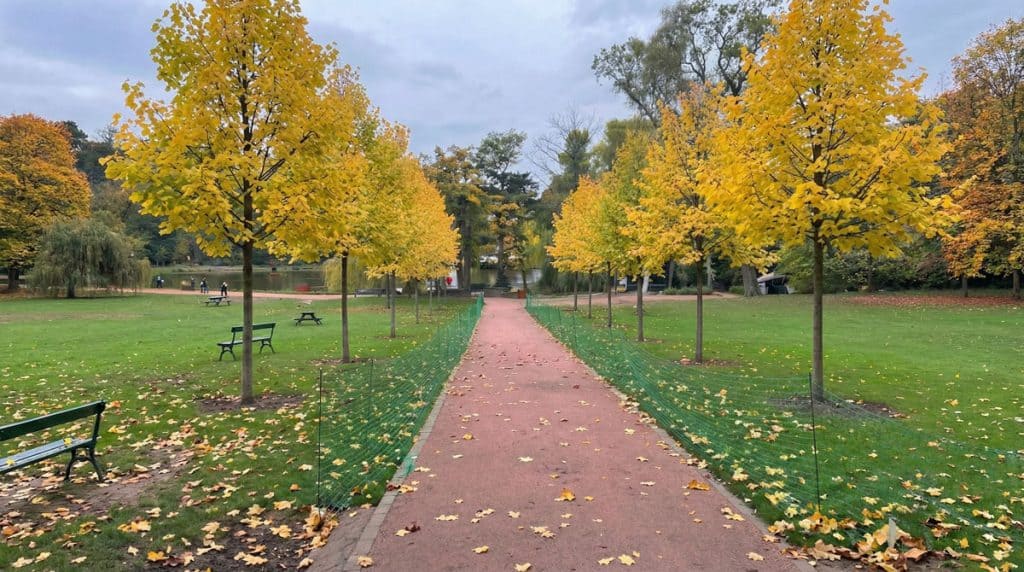
A park is not a natural landscape; it requires active management guided by long-term vision and goals. The current plan addresses some of the most haphazard planting which has taken place in the park over the years, to make sure future generations can inherit a coherent, well-structured treescape.
At the end of May, four dead or dying trees will also be felled: brief path diversions may be in place while felling is carried out. Two of the trees pose a health-and-safety risk to users; the other two, which were exposed after the laurel cutback on the dam bank, include one overhanging the pool and one at the bottom of the main path. This should be the last significant felling for some time. Before we fell any trees or cut back any plants, we always carry out careful checks for nesting birds to minimise wildlife disturbance: our wildlife and birdlife are key priorities for us in all our work protecting the park.
We commissioned a safety inspection of the pool’s Victorian-era dam: a 4-metre structure of mud and clay. Experts advised that trees rooted in the dam wall were likely to undermine its integrity if they fell, so overhanging trees had to be removed in this area. The laurel hedge on the far side, which had encroached on the path, has been given a deep prune to restore safe access. Prior to this work, checks were made to avoid disturbing nesting birds.
Japanese knotweed is present in certain locations around the Pool, and we are proactively taking steps to manage, control and eradicate it. There is also some skunk cabbage isolated near the Japanese garden at the Chantry Rd end of the park. Both of these invasive species are being very carefully controlled. For the knotweed, we’ve contracted a specialist contractor who is using a water-safe chemical treatment. This is applied by painting or injection: never spraying, to reduce the risk of wind drift. Treatment happens in late summer when the plant draws energy down into its rhizome root system: until then, it’s really important to let the plant grow undisturbed. Please do not pull up or cut the knotweed: disturbance of any kind that doesn’t stick to stringent guidelines can spread it further.
Posters in the park explain the ongoing work, and updates appear on the website and at subscriber meetings. If you have questions about tree management, the Trustees welcome your feedback: please email info@moseleypark.co.uk